

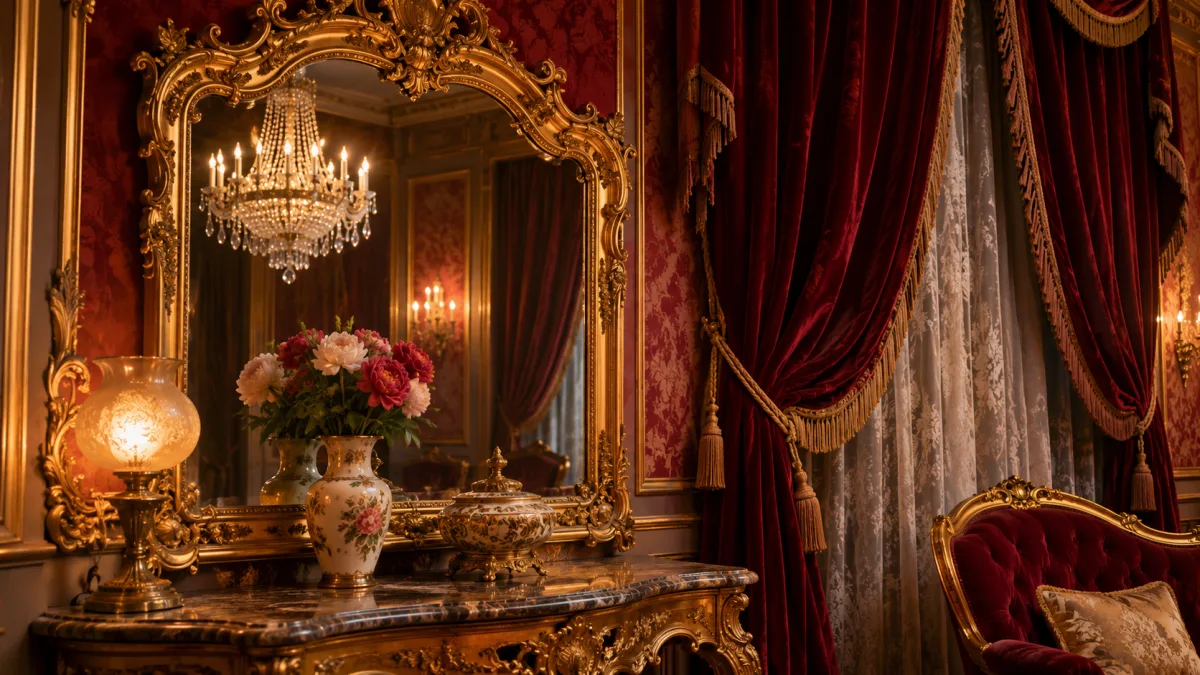
There was a time when luxury hid behind closed shutters. Salons lined with mirrors, rooms dressed like stage sets, and a discretion that was part of the charm.
When you read about "luxury brothels in history," you probably want to know three things. What a maison close was. Which ones were the most famous. And why they still spark so much curiosity.
We'll tell you at an unhurried pace, without sensationalism, and with the facts that are actually known.
What is a maison close?
The French expression means "closed house." The name comes from a very visible rule. These establishments had to keep their shutters closed and, according to Paris Zigzag magazine, a red lantern at the door.
They were the so-called "maisons de tolérance," or houses of tolerance. They operated in France during the 19th century and the first half of the 20th, under a regulated system dating back to 1804.
It's worth being honest here. Not everything was glamour. That system monitored and registered the women who worked in the houses, and their reality was very different from the image of luxury left behind by the chronicles.
What did remain was an aesthetic. And that aesthetic is what fascinates us today.
Le Chabanais: the salon of famous names
If one house embodied refinement, it was Le Chabanais. It stood at number 12 rue Chabanais, very close to the Louvre, and was open from 1878 to 1946. Its fame was built on its decor. Each room followed a different style, with a theatricality designed to surprise.
According to Paris Zigzag, figures such as Guy de Maupassant, Salvador Dalí and Prince Edward, the future king of England, passed through its doors. It was the place where a single night could feel like a novel. And that is why so many people remember it.
One-Two-Two: 22 rooms, 22 worlds
In the mid-1920s, Le Chabanais lost its top spot. The One-Two-Two took its place, at number 122 rue de Provence. Hence its name: it was the address, and it sounded international.
Its great signature was its themed rooms. There were 22 of them, each with a different decor.
It's an idea that remains relevant. A space built around an atmosphere, with its materials, its light and its character, still captivates almost a century later.
High society of the era frequented the house. It was a place to see and be seen.
Le Sphinx: Egypt in Montparnasse
Le Sphinx became famous for a very different reason. It stood on boulevard Edgar Quinet, in Montparnasse, and was not set up in a renovated building. It was built from scratch as a five-story Art Nouveau mansion.
Its decor followed a single theme: the Egypt of the pharaohs. While Le Chabanais and the One-Two-Two combined styles from different countries and eras, the Sphinx committed to one idea and carried it through to the end.
It also had a very busy salon and dining table. Some came only for the atmosphere, the dinner and the conversation.
It was proof that true luxury has always been atmosphere.
Madame Petit: Barcelona had its own, too
Anyone searching for luxury brothels in Barcelona sooner or later comes across one name: Madame Petit.
It was in the Barrio Chino, at number 6 calle Arc del Teatre. Its origins go back to the 1888 Universal Exposition, and it enjoyed its golden age between World War I and the Civil War. This was probably the city's most luxurious and famous establishment.
Among its workers were many foreign women, especially French. It closed in 1956. Today only traces remain: one of its stained-glass panels is preserved in the Barcelona History Museum.
That Raval of cabarets and dance halls remains part of the city's memory.
What they had in common
They were very different from one another. And yet they shared certain traits:
A theme. Each house or each room told a story, from the Egypt of the pharaohs to other worlds.
A salon. Before anything else, there was a space to talk, drink and gaze at one another.
Discretion. The closed shutters were not a detail. They were the concept.
Their own press. There were guides, such as "Le Guide Rose," that listed the houses of the time and even carried advertising.
These are the same principles that set a luxury space apart from an ordinary one today.
The end of an era: the 1946 law
It all ended on April 13, 1946. That day France passed the law bearing the name of Marthe Richard, a Paris councilwoman, which forced the houses of tolerance to close. Around 1,400 establishments were shut down across the country. In Paris alone, 195. With them went the salons, the lamps and the sets. But not the fascination.
Why they still fascinate
The maisons closes passed from reality into the collective imagination. Today they are a subject in art history.
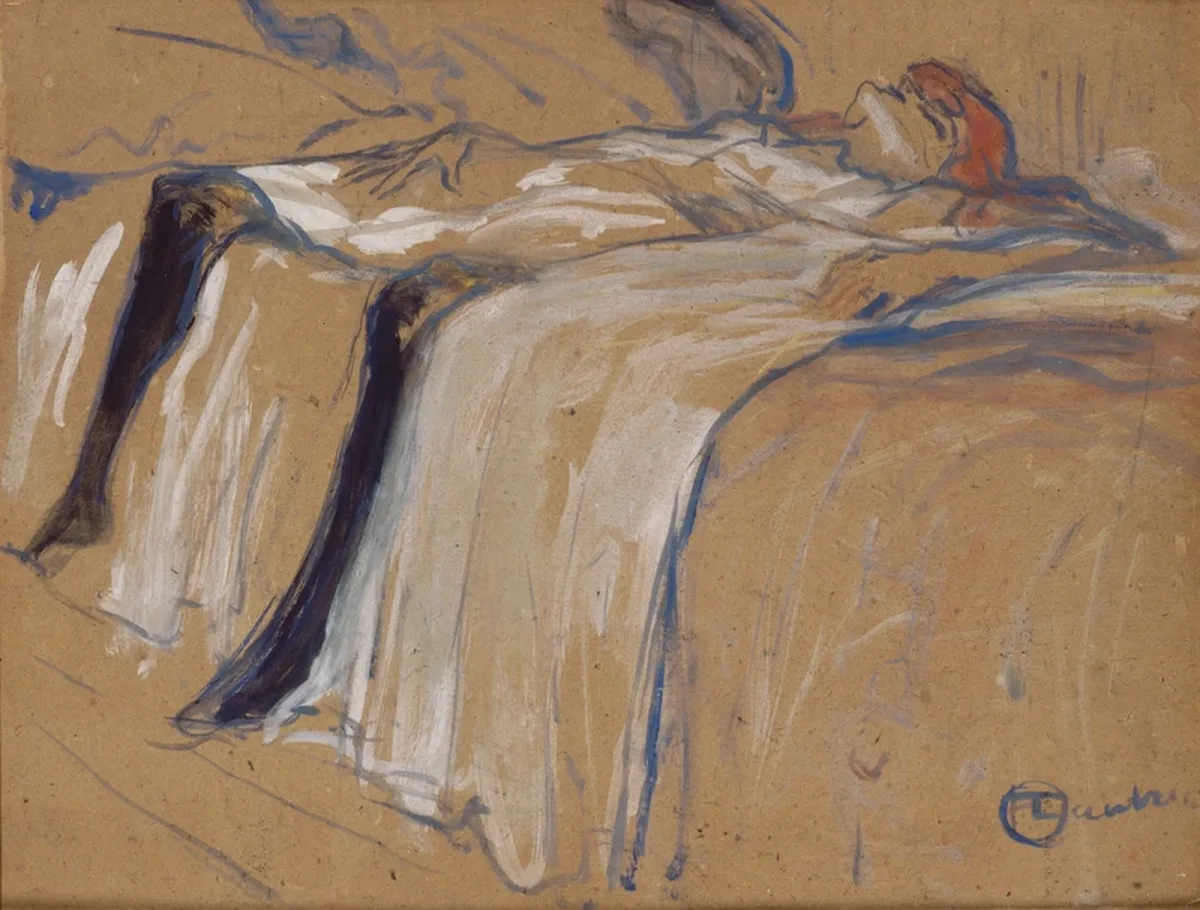
Henri de Toulouse-Lautrec is the best example. The artist frequented these houses from 1892 and even moved into them to observe at his leisure. From that experience came his series "Elles."
In 2015, the Orsay itself devoted a major exhibition to images of prostitution between 1850 and 1910, with works by Manet, Degas, Van Gogh and Picasso.
What attracts us is not only the mystery. It's the blend of elegance, secrecy and theater.
What remains of that luxury today
Those houses left us a lesson. Luxury doesn't depend on size or noise. It depends on four things: design, atmosphere, service and discretion.
That is the idea we follow at Maison Close, in the heart of Passeig de Gràcia. A private space where each setting has its own character.
If this is the first time you've felt curious about a place like this, we'll explain how it works before you take any step.
And if you'd prefer to see it in person, you can book a visit.
Frequently asked questions
What is a maison close? It's the French name for houses of tolerance, regulated brothels that operated in France until 1946. It means "closed house" because of their always-closed shutters.
What was the most famous maison close? Le Chabanais, the One-Two-Two and Le Sphinx are usually cited, all three in Paris. All three were considered among the most luxurious.
When did the maisons closes close? In France, after the law of April 13, 1946, which imposed their definitive closure.
Were there luxury brothels in Barcelona? Yes. The best remembered is Madame Petit, in the Barrio Chino, which closed in 1956.
A story that lives on
The maisons closes disappeared. Their love of detail did not.
If you'd like to discover how that idea of luxury is interpreted today, you're invited to get to know us at your own pace.
